
Baltic Sea ferries connect major ports in Finland, Sweden, Estonia, Latvia, Lithuania, Germany, Poland and Denmark. The network includes frequent short crossings, overnight passenger ferries, long-distance ro-pax routes and domestic island services carrying passengers, vehicles and freight.
Network overview: The Baltic ferry system is made up of several overlapping corridors rather than one single network. Helsinki and Tallinn form a high-frequency Gulf of Finland link, Sweden and Finland are connected by several overnight and regional services, while Germany, Poland and the Baltic states have important passenger and freight connections with Scandinavia.
Last checked: 7 September 2026.
Current Baltic Sea ferry network
The Baltic has one of Europe’s most interconnected groups of international ferry services. Passenger ferries operate between capitals, regional ports and islands, while ro-pax routes in the southern and eastern Baltic also form important freight corridors between Scandinavia, the Baltic states and continental Europe.
Many principal routes operate throughout the year, although frequency, departure times and vessel deployment can change by season. Island networks serving the Åland Islands, Gotland, Bornholm, Saaremaa and Hiiumaa form another important layer of the system.
Principal international passenger ferry corridors
| Corridor | Representative routes | Network role |
|---|---|---|
| Finland-Estonia | Helsinki-Tallinn | Frequent year-round passenger and vehicle connection across the Gulf of Finland |
| Sweden-Finland | Stockholm-Helsinki, Stockholm-Turku, Kapellskär-Långnäs-Naantali and Vaasa-Umeå | Overnight and regional passenger and vehicle services, with several routes serving Åland |
| Sweden-Estonia | Stockholm-Tallinn | Overnight passenger and vehicle connection |
| Sweden-Latvia | Nynäshamn-Ventspils | Passenger, vehicle and freight connection between Sweden and Latvia |
| Germany-Latvia | Travemünde-Liepāja | Long-distance passenger, vehicle and freight-oriented ro-pax service |
| Germany-Sweden | Rostock-Trelleborg, Travemünde-Malmö and Travemünde-Trelleborg | Major passenger, vehicle and freight corridors between continental Europe and southern Sweden |
| Germany-Finland | Travemünde-Helsinki | Long-distance year-round passenger, vehicle and freight service |
| Poland-Sweden | Świnoujście-Ystad, Świnoujście-Trelleborg, Gdynia-Karlskrona and Gdańsk-Nynäshamn | Dense network of passenger, vehicle and freight connections between Poland and Sweden |
| Lithuania-Sweden | Klaipėda-Karlshamn | Overnight passenger, vehicle and freight connection |
| Lithuania-Germany | Klaipėda-Kiel | Overnight passenger, vehicle and freight connection |
The routes above represent the main international passenger-accessible corridors rather than every ferry service in the Baltic. Freight-only services and domestic island networks are treated separately.
Finland and Estonia
The Helsinki-Tallinn ferry is the Baltic’s main high-frequency short-distance international passenger corridor. Several operators provide passenger and vehicle services throughout the year, serving both point-to-point journeys and short trips between the two capitals.
Helsinki is the principal Finnish gateway on this corridor, while Tallinn also has an overnight connection with Stockholm, giving the Estonian capital an important role in both the Gulf of Finland and central Baltic passenger networks.
Explore the Finland ferry network and Estonia ferry network for their wider domestic and international connections.
Sweden and Finland
Sweden and Finland are connected by several different ferry systems. Stockholm has established overnight links with Helsinki and Turku, while Finnlines connects Kapellskär with Naantali via Långnäs in the Åland Islands.
The Stockholm-Helsinki ferry is one of the best-known overnight Baltic passenger corridors. Farther north, Vaasa and Umeå are connected across the Gulf of Bothnia.
The Åland Islands play an important role within the Sweden-Finland network. International ferries call at Mariehamn or Långnäs, while regional services provide additional links with mainland Finland and Sweden.
Germany, Poland and southern Sweden
The southern Baltic contains a dense group of ro-pax routes linking Germany and Poland with ports in southern Sweden. These services carry cars, coaches and ordinary passengers, while freight traffic forms a major part of their commercial role.
German connections include Rostock-Trelleborg, Travemünde-Trelleborg and Travemünde-Malmö. Poland is linked with Swedish ports including Ystad, Trelleborg, Karlskrona and Nynäshamn.
The Gdynia-Karlskrona ferry is one of the principal Poland-Sweden corridors, linking the Polish port of Gdynia directly with Karlskrona in southern Sweden.
This concentration of routes gives road travellers and freight operators several alternatives between continental Europe and Scandinavia rather than depending on a single ferry corridor.
Latvia and Lithuania
Latvia and Lithuania form an important part of the eastern Baltic passenger and freight network. Latvia is connected with Sweden by Nynäshamn-Ventspils and with Germany by Travemünde-Liepāja.
From Lithuania, Klaipėda has passenger and vehicle ferry connections with Karlshamn in Sweden and Kiel in Germany. These longer overnight services provide direct links between the Baltic states, Scandinavia and continental Europe.
Together with Estonia, Latvia and Lithuania form the eastern side of the Baltic passenger ferry network, although the structure of ferry services differs considerably between the three countries.
Island ferry networks
Domestic and regional island services form a substantial part of Baltic ferry transport. Some operate as essential year-round transport links, while others have greater seasonal variation.
- Åland Islands – connected with Finland and Sweden by international and regional ferry services.
- Gotland – passenger and vehicle ferries connect Visby with Nynäshamn and Oskarshamn on the Swedish mainland.
- Bornholm – Rønne is connected with Ystad in Sweden and Køge in Denmark.
- Saaremaa and Hiiumaa – served by domestic Estonian ferry connections.
Main ferry countries
The principal countries in the Baltic passenger ferry network are:
Main ferry ports
Important passenger and ro-pax ports around the Baltic include:
- Helsinki, Finland
- Turku, Finland
- Naantali, Finland
- Vaasa, Finland
- Tallinn, Estonia
- Stockholm, Sweden
- Kapellskär, Sweden
- Nynäshamn, Sweden
- Umeå, Sweden
- Mariehamn and Långnäs, Åland
- Trelleborg, Sweden
- Malmö, Sweden
- Ystad, Sweden
- Karlskrona, Sweden
- Karlshamn, Sweden
- Visby, Gotland
- Rostock, Germany
- Travemünde, Germany
- Kiel, Germany
- Gdynia, Poland
- Gdańsk, Poland
- Świnoujście, Poland
- Ventspils, Latvia
- Liepāja, Latvia
- Klaipėda, Lithuania
- Rønne, Denmark
Main Baltic ferry operators
The Baltic passenger network is served by a mixture of large international ferry groups and operators focused on individual corridors or island networks.
- Tallink Silja Line
- Viking Line
- Eckerö Line
- Finnlines
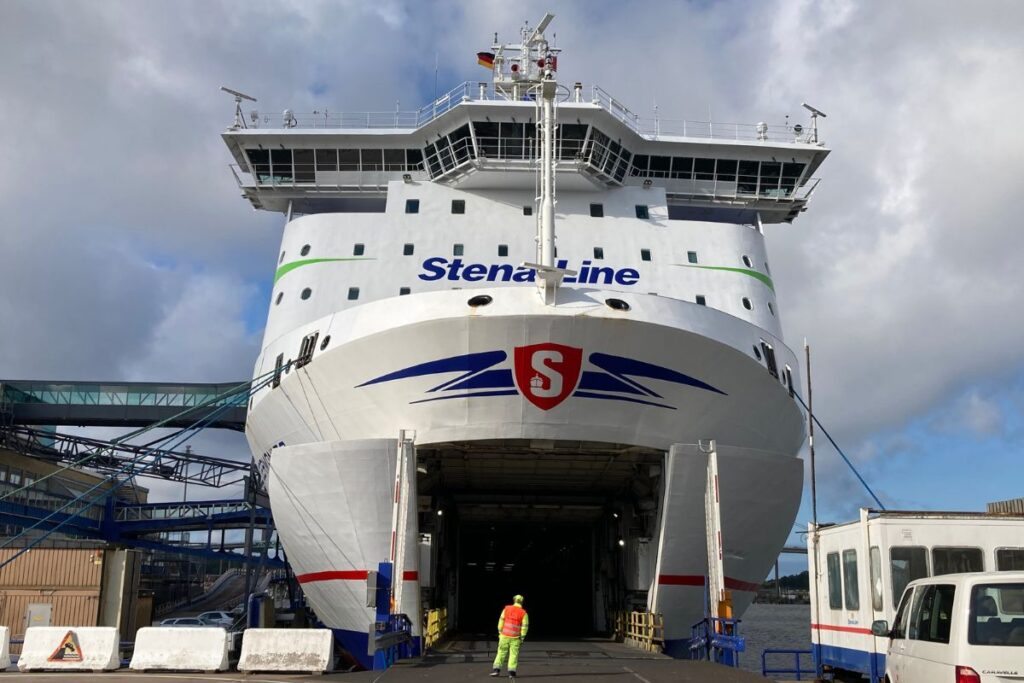
- Stena Line
- Wasaline
- TT-Line
- DFDS
- POLSCA Baltic Ferries
- Destination Gotland
- Bornholmslinjen
The operator structure can change even when individual ferry routes continue. FerryLines therefore treats the operating company, brand and wider ownership structure separately where relevant.
Browse FerryLines ferry operator profiles.
Passenger, vehicle and freight access
Most of the principal routes listed on this page are ro-pax services carrying passengers alongside cars and commercial freight. Foot-passenger access varies between routes and terminals, and some ferry services in the Baltic are intended only for freight traffic.
FerryLines does not treat a route as an ordinary passenger connection unless passenger access can be confirmed. Individual route pages therefore distinguish between foot-passenger, vehicle and freight availability.
Discontinued and historic routes
Baltic ferry networks change over time, so routes found in older ferry databases should not automatically be treated as current. One example is Stena Line’s former Nynäshamn-Hanko service, which ended in 2023 and is not part of the current passenger network.
Suspended, discontinued and proposed services are labelled separately from active routes when they are covered by FerryLines.
Seasonality and reliability
Many of the main international Baltic ferry corridors operate throughout the year, including Helsinki-Tallinn and major routes linking Sweden with Finland, Germany, Poland and the Baltic states.
Frequency, departure times and vessel assignments can still change between summer and winter. Island services may show stronger seasonal variation, while weather, maintenance and operational disruption can affect individual departures.
Check the relevant ferry route page and the current operator timetable before travelling.
How the Baltic ferry network fits together
The Baltic is best understood as a group of overlapping ferry systems. Helsinki and Tallinn form the main Gulf of Finland passenger corridor. Stockholm, Turku, Helsinki and the Åland Islands anchor much of the central Baltic network, while Vaasa-Umeå provides an important connection farther north.
In the southern Baltic, German and Polish ports connect with several Swedish gateways. Farther east, Latvia and Lithuania have direct ferry links with both Scandinavia and Germany. Domestic services to Gotland, Bornholm and other islands add another layer to the network.
The result is a ferry system in which many journeys can be made through more than one corridor, port or operator.
Explore the Baltic Sea ferry network
- Sweden ferries
- Finland ferries
- Estonia ferries
- Latvia ferries
- Lithuania ferries
- Germany ferries
- Poland ferries
- Denmark ferries
- Åland Islands ferries
- Gotland ferries
- Helsinki-Tallinn ferry
- Stockholm-Helsinki ferry
- Gdynia-Karlskrona ferry
- Helsinki ferry port
- Tallinn ferry port
- Stockholm ferry port
- Turku ferry port
- Explore all ferry regions
- Browse ferry routes
- Browse ferry ports
- Browse ferry operators
Sources and verification
Current route status, passenger access and network changes are checked against official ferry operator route pages, timetables and company announcements. Primary sources used for Baltic Sea coverage include the relevant ferry operators and port authorities.
Route status, operating periods, frequencies and vessel deployment can change. FerryLines distinguishes active passenger services from seasonal, freight-only, proposed, suspended and discontinued routes.